CDOIF MHHHRA Guidance: What COMAH Operators Need to Know

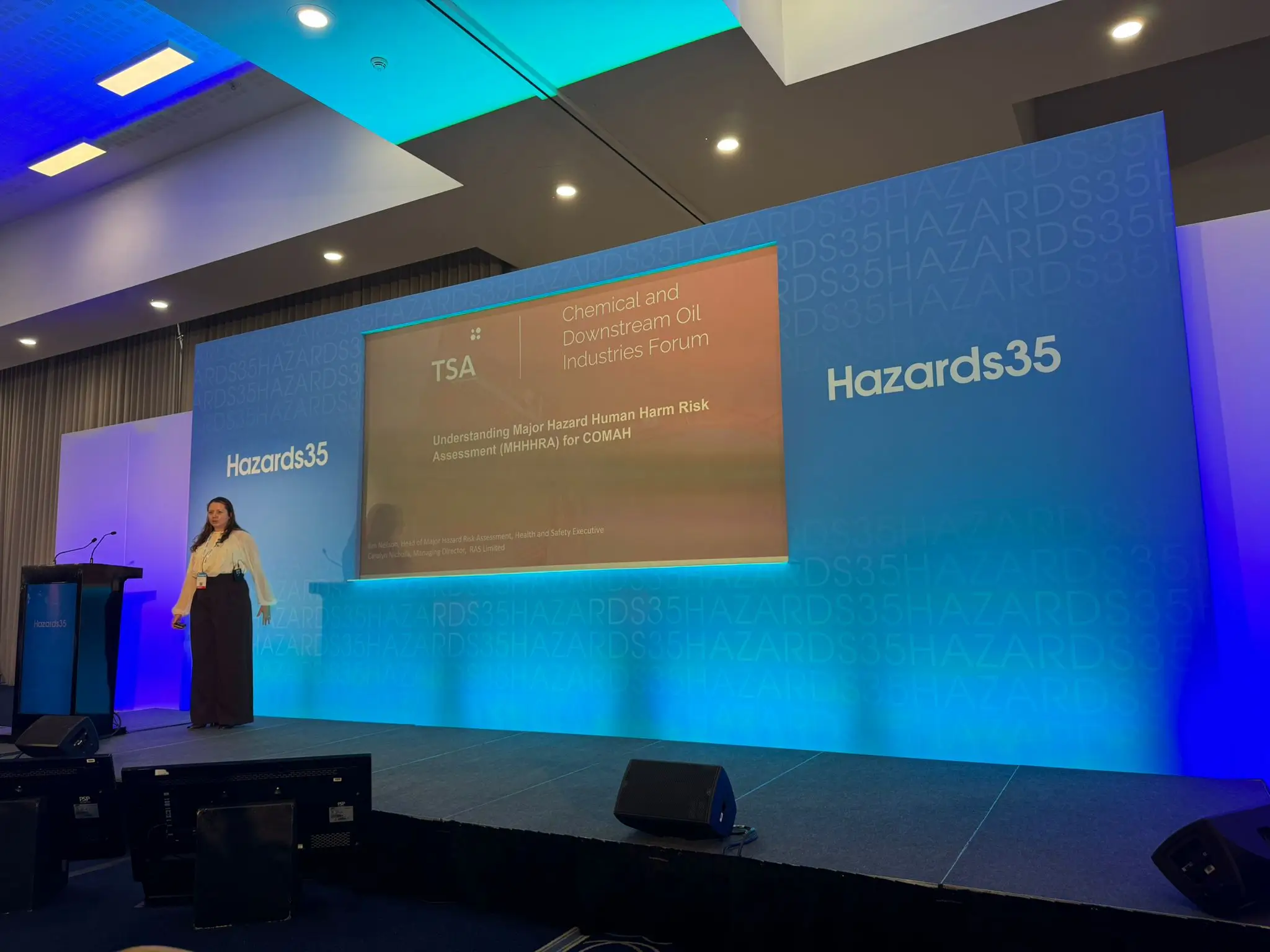
The new guidance developed by the Chemical and Downstream Oil Industries Forum (CDOIF), ‘Major Hazard Human Harm Risk Assessment (MHHHRA) for COMAH’ was published today and represents an important development in how major accident risks are assessed across the COMAH sector.

It aims to do this by establishing a more uniform approach to assessing the potential harm to people from major accident hazards.
RAS has been directly involved in the development of the guidance through the CDOIF Risk Assessment Working Group and having also trialled its application across a range of different facilities we have gained practical insights into what the guidance means for operators and, importantly, how organisations can overcome their unique obstacles and begin working towards compliance.
But what exactly is the new CDOIF MHHHRA guidance, who does it apply to, and what should COMAH operators be doing now? These are all questions you should know the answers to, so read on to find out.
What is the CDOIF MHHHRA guidance?
MHHHRA stands for Major Hazard Human Harm Risk Assessment.
The new CDOIF guidance has been developed to provide industry good practice for assessing risks to human health arising from major accident hazards at COMAH establishments. It provides a structured and consistent methodology for undertaking a suitable and sufficient assessment of major accident risks under the COMAH Regulations.
The guidance is divided into four main areas:
- Identification of major accident hazard scenarios
- Analysis
- Assessment
- ALARP demonstration
Each section is further split into guiding principles and a suggested methodology for applying them in practice. The guidance also includes worked examples intended to help operators and risk assessment practitioners understand how the approach can be applied.
The intention is that this provides operators, third parties and regulators with a common reference point for major hazard risk assessment that when applied correctly, will ensure that risks are managed to a level that is As Low As Reasonably Practicable.
One of the most significant developments is the renewed focus on the COMAH definition of a major accident.
While industry has traditionally focused on fatalities, the regulations refer to events posing “serious danger to human health”. Consequently, MHHHRA requires consideration of both fatalities and serious permanent injury or health effects, potentially broadening the range of hazards requiring assessment and justification.
Why was the new MHHHRA guidance created?
The development of the guidance began in 2021 through the CDOIF Risk Assessment Working Group, bringing together representatives from industry and the regulator. One of the drivers for its development was the absence of comprehensive published good practice covering MHHHRA, alongside inconsistencies in approach across high-hazard sectors and in regulatory enforcement.
The new guidance intends to address this by establishing a more consistent approach to major hazard risk assessment whilst providing practical guidance on how to apply it.
The involvement of both industry and the regulator in developing the guidance is particularly significant. It means the document is not simply theoretical guidance; it represents an agreed approach to good practice across the sector based on a scrutinous consultation process.
Who does the CDOIF MHHHRA guidance apply to and when?
The guidance is applicable to all COMAH operators, from simple storage facilities to complex chemical processing sites.
The scale or complexity of an establishment does not remove the need to consider the principles within the guidance. Instead, the methodology provides a framework that can be applied proportionately to the operations and risk profile of an individual COMAH site. For operators, this means understanding the new guidance and considering how their existing risk assessments compare against the approach it sets out.
Whilst it is applicable throughout the entirety of your assessment, the guidance places significant emphasis on the front end of the assessment process. Operators are expected to undertake detailed scenario screening informed by hazard identification studies, developing a well-justified list of major accident hazards. This forms the foundation for the subsequent stages of the assessment.
What does the MHHHRA guidance mean for COMAH operators?
The introduction of the guidance does not necessarily mean that operators need to start their risk assessments again from scratch. Due to the level of detail contained within it, achieving alignment is unlikely to be an overnight exercise. For many operators, it will instead be a longer-term process of progressively reviewing and developing existing risk assessments.
Understanding where your existing assessments sit against the new expectations is the first step, and a useful starting point is a gap analysis.
This involves reviewing the existing approach to assessing potential harm to people and comparing it against the principles and methodology contained within the CDOIF MHHHRA guidance, providing a more pragmatic route to compliance than attempting to replace existing assessments wholesale. Existing HAZOPs, COMAH reports and risk assessments will contain many of the necessary building blocks, but you have a responsibility to find these and piece them together to discover what more needs to be done. This is where RAS comes in.
How to comply with the new MHHHRA guidance – Our step-by-step guide
A sensible approach is to:
-
Understand the guidance
Familiarise the relevant people within your organisation with the structure, principles and methodology contained within the CDOIF MHHHRA guidance.
-
Review your existing assessments
Consider how your current major accident risk assessments address the areas covered by the guidance, including scenario identification, analysis, assessment and ALARP demonstration.
-
Complete a gap analysis
Identify where your existing approach meets the guidance and where further work may be required.
-
Prioritise the gaps
Not every action will necessarily have the same importance or urgency. Consider the findings in the context of your site’s operations, hazards and existing risk profile.
-
Develop a proportionate plan
Use the findings from the gap analysis to establish a pragmatic programme for moving towards the good practice set out in the guidance.
The objective should not simply be to demonstrate that a document has been updated. The focus should remain on ensuring that major accident scenarios receive sufficient scrutiny and that risks to people are managed to a level that is ALARP.
How RAS can help with MHHHRA
The new CDOIF MHHHRA guidance provides an important common reference point for major hazard human harm risk assessment across the COMAH sector. However, understanding what the guidance means for an individual site is likely to be the most important first step for many operators.
RAS can support organisations by helping to assess their current position against the guidance, identify potential gaps and determine practical next steps towards meeting the established good practice.
Our direct involvement in developing the guidance, combined with experience of trialling its application across different facilities, means we can provide insight grounded in both the development of the methodology and its practical application.
With publication imminent, now is the ideal time to begin preparing for the next chapter in COMAH risk assessment. If you would like to understand what the implications for your site are, get in touch with the RAS team to discuss your requirements and begin your journey towards compliance.