Want to Find Out More About our Process Safety support?
We will provide bespoke solutions that are the right fit for you and your team.
For new projects and developments, we can provide expert process safety to manage the hazards and minimise risk.
From the initial design stages, we can support you to ensure that your new plant is inherently safer. Our support continues as the project develops through construction, commission and onto operations to minimise the major accident hazard risk.
For industrial processes involving hazardous materials, we can advise you on all of the legislative requirements for your new facility.
At RAS we can guide you through the application process for Hazardous Substance Consent under The Planning (Hazardous Substances) Regulations 2015 to your local authority. We will bring clarity to the complexity of the regulations, helping you to navigate each step of the process from the initial application through to the approval of consent.
Our specialist consultants have the knowledge and experience in Hazardous Substance Consent applications and variations, supported by their wider expertise in risk management.
We have worked with, and as an agent on behalf of, many organisations, each storing a range of substances. This has given us an effective and efficient system for applying for Hazardous Substances Consent. We facilitate each step of the application process including each of the consultation stages with the stakeholders, such as the HSE.
Whether you would like to start the process of applying for Hazardous Substance Consent or you would like to vary your existing consent, we can support you using our expert knowledge.

We have a wealth of experience in managing the restrictions on developments in proximity to major hazard sites and pipelines under the land use planning framework implemented by the HSE.
Where new developments are proposed in proximity to HSE consultation zones, which are imposed surrounding major hazard sites and pipelines, the HSE will evaluate the development and provide statutory response to the local planning authority. We offer bespoke advice to understand the methodology by which developments are analysed by the HSE and to indicate whether the proposed use of a development would be permissible under HSE methodology.
Using our expert knowledge built from many years of working with major hazard facilities, we can help you to understand the level of risk posed to the development and provide suggestions to minimise the risk to future users of the proposed development.
We provide our specialist LUP advice to both prospective developers and major hazard assets themselves to clarify the LUP assessment process and provide indication of whether certain development types will be acceptable within HSE consultation zones.

The first step of the COMAH journey is notification to the competent authority. The notification includes key information on the facility and the COMAH relevant substances to be held on site.
We can streamline this process using our knowledge and experience to complete the notification form in full compliance of the regulations for new or growing facilities. Both Lower and Upper Tier COMAH establishments must complete a COMAH notification to inform the regulator about their impending COMAH status. The timing of the notification depends upon the nature of the existing facility and the exact point in time at which the COMAH thresholds will be exceeded.

Navigating the world of legislation and deciphering what is applicable to you in the process safety world can be daunting, but we are here to help!
We can advise you on the latest industry guidance and legislation you need to comply with in order to be operating safely in the eyes of the law. We provide tools which breakdown all the legal jargon into easily digestible questions to benchmark your organisation against, enabling easy identification of which legal requirements are applicable to you, if you are compliant and any non-compliance issues. Where issues with compliance are found, we can help you to develop and implement the changes necessary to ensure you operate safely and comply with your legal duties.

We have a wealth of knowledge on what is considered good practice within the process safety industry with specific in-house expertise on a wide array of topics. We keep up-to-date with all the latest guidance published within the industry, allowing us to provide you with accurate and current advice on the health and safety expectations relevant to your organisation.
With a broad spectrum of ready-made gap analysis tools at our disposal, we can help benchmark your organisation against specific published guidance or multiple sources of guidance focused on a specific topic. This enables identification of areas for improvement to ensure alignment with Relevant Good Practice (RGP), supporting the continuous development of your organisation to be the safest it can be.

We will provide bespoke solutions that are the right fit for you and your team.
Hazard identification is evaluating processes and systems to identify potential causes that could result in hazardous consequences. We specialise in helping our clients understand and manage complex risk. Only once your hazards are properly understood can they be managed.
Hazard identification is the bedrock of risk assessment. If the hazard identification technique is incorrect or quality of the study is poor, then all risk analyses, assessments and decisions made based on those studies are of equally low quality, and you cannot be sure that your risks are appropriately managed.
A key area of our expertise is compliance with the requirements of the Control of Major Accident Hazards (COMAH) Regulations 2015, which are designed to minimise the risk of major accidents involving dangerous substances to protect both people and the environment.
Operators of COMAH sites, whether they are a Lower or Upper Tier, must demonstrate that they have taken all measures necessary to minimise the risk of major accidents.
Aspects required under COMAH include a Major Accident Prevention Policy (MAPP), a robust risk assessment, emergency response procedures and for upper tier sites, a COMAH safety report.
We can work with you to develop a bespoke plan that is the right fit for you and proportionate to the level of risk and scale of your operations.
We are innovative, creative and agile. Every piece of work we undertake is bespoke to the needs of our clients.
We have a holistic approach to complex risk management, developing smart solutions which work for you.
Can’t find what you’re looking for? Contact our team here.

The first step to understanding your risk is identifying your hazards - our experts deliver effective and productive hazard studies.

Managing human factors is key to preventing major accidents but is also beneficial for system performance and business productivity.

We bring clarity to help you understand your risk, transforming complex assessments into concise outputs.
Find out what our team have been up to lately.

CDOIF Environmental Risk Tolerability for COMAH

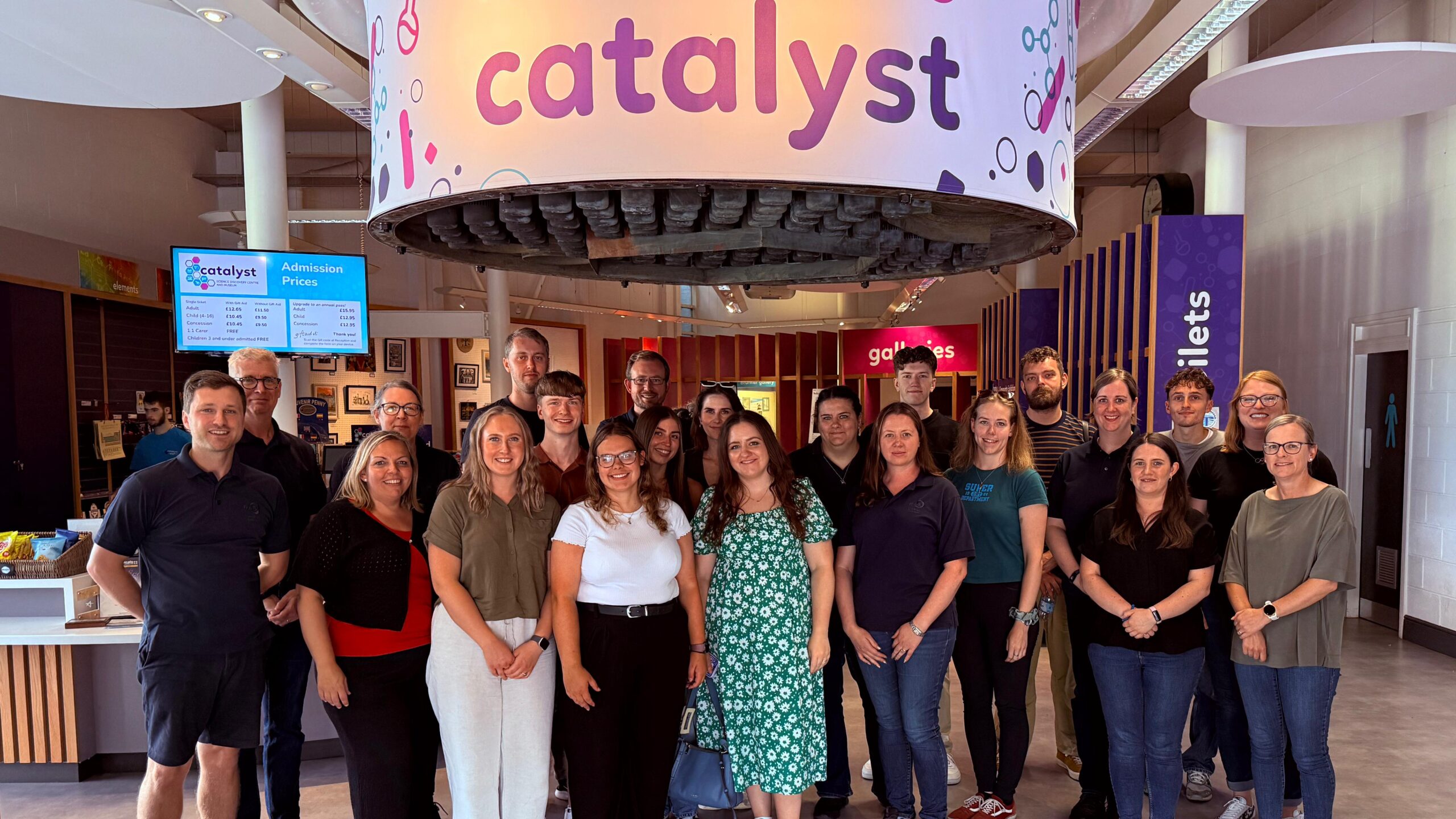
This year we held our annual RAS Team Day at the Catalyst Science Discovery Centre and Museum!


Implementing simple changes in behaviours and attitudes can go a long way to reducing the burden of the COMAH review process, streamlining the path to successful results.